Welcome to ALCT Group Co.,Ltd.
National service hotline: mike.lin@tiandunhk.com +86 18501355858
Welcome to ALCT Group Co.,Ltd.
National service hotline: mike.lin@tiandunhk.com +86 18501355858
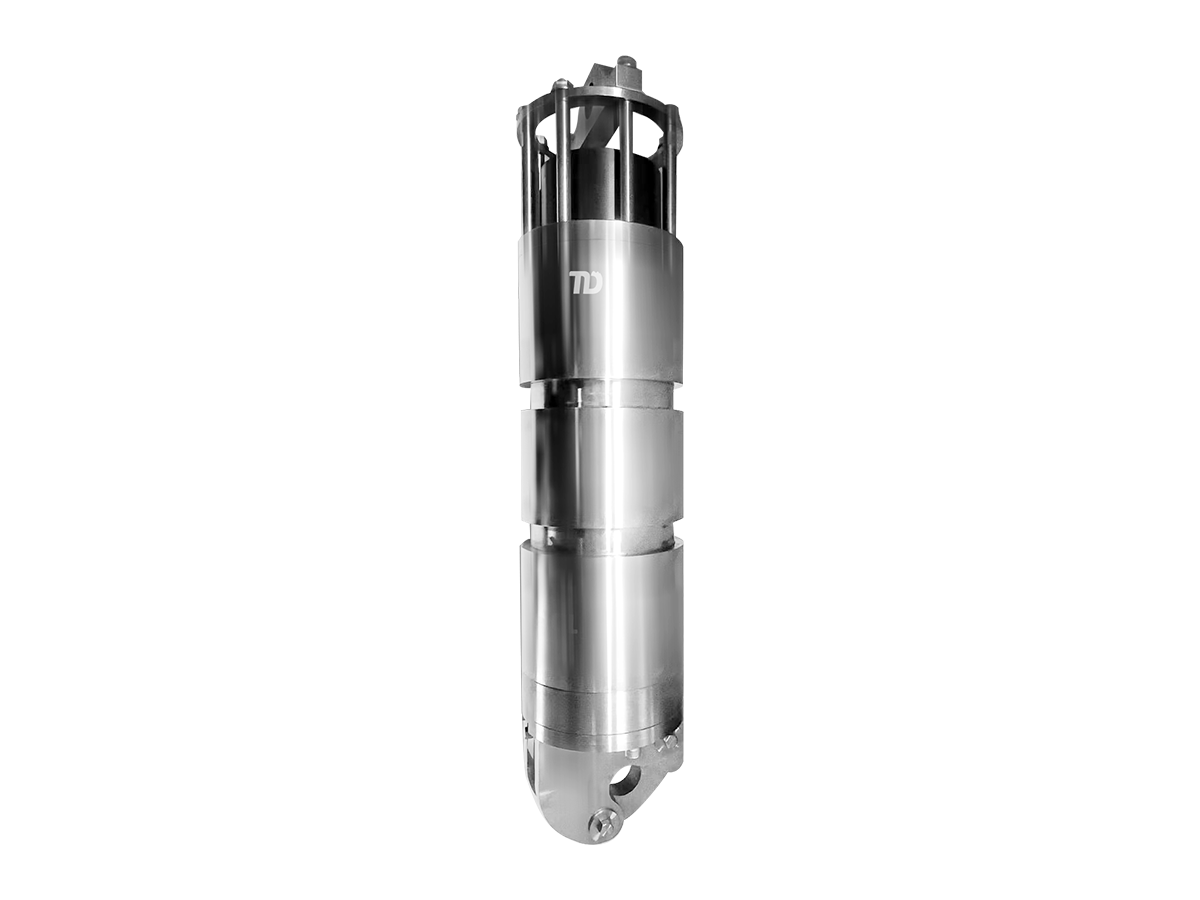
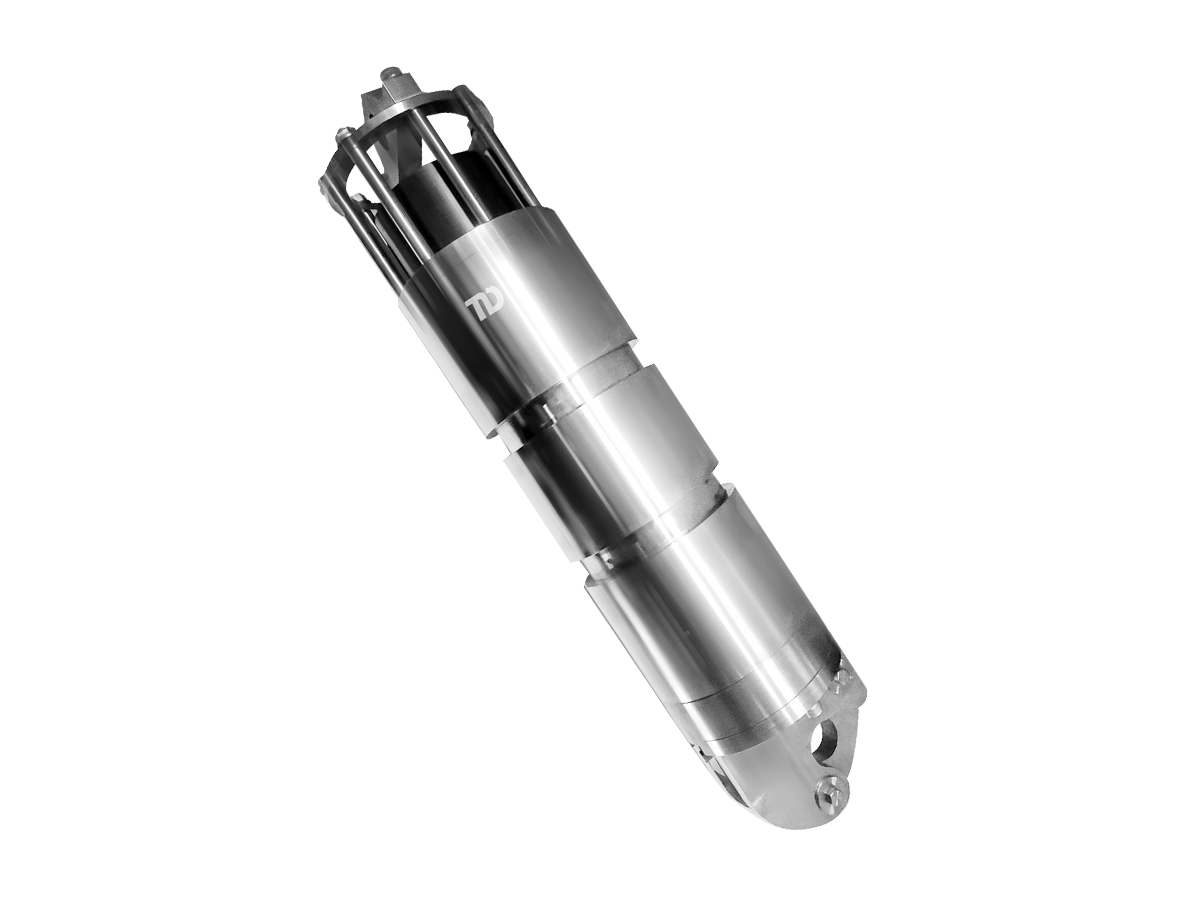
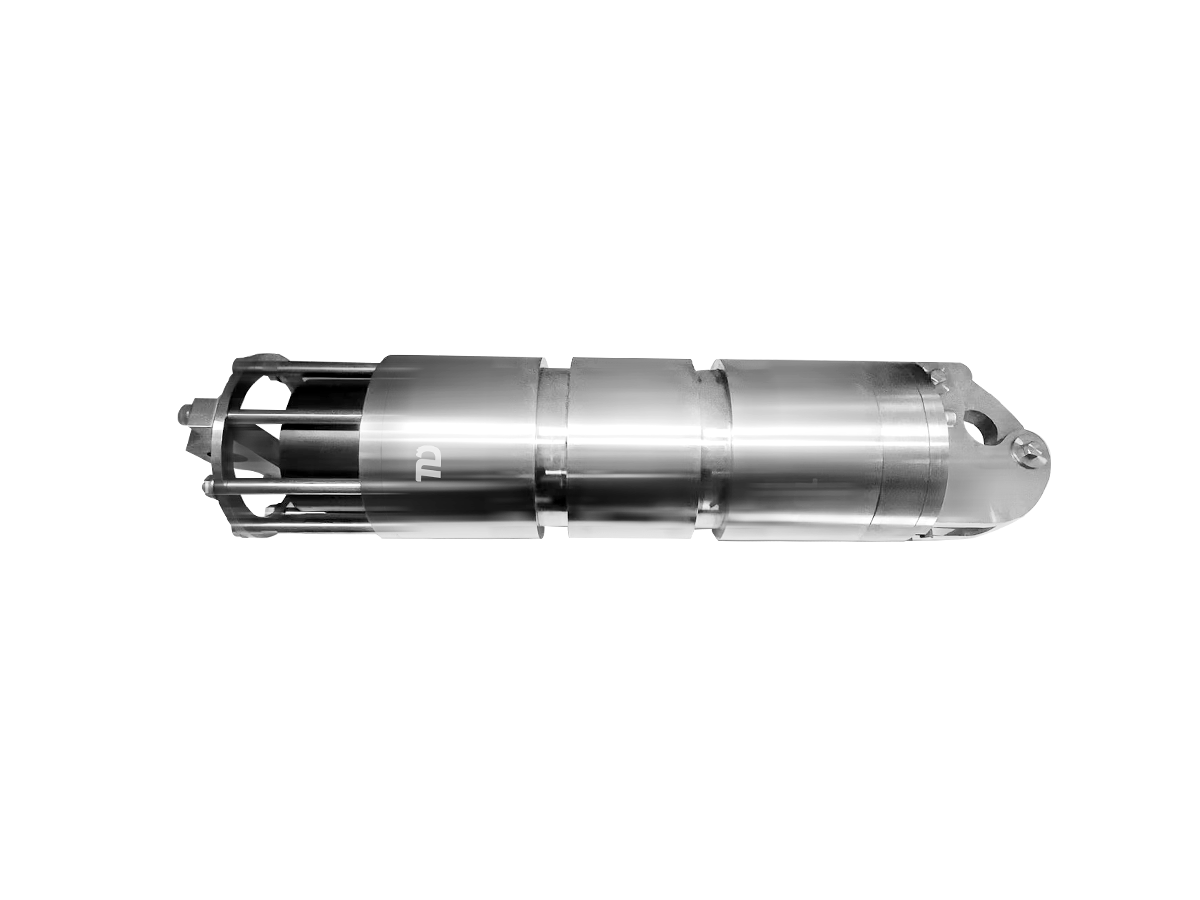
SinoAR-05 mechanical ocean acoustic release device
The SinoAR-05 mechanical ocean acoustic release device is a key system for the recovery of ocean observation equipment with mature technology and excellent performance.
Product details
Product introduction
The SinoAR-05 mechanical ocean acoustic release device is a key system for the recovery of ocean observation equipment with mature technology and excellent performance. It is designed specifically for safe and reliable equipment release and recovery in complex and harsh marine environments such as deep seas, high pressures, and long cycles.
This release device creatively combines classic mechanical transmission mechanisms with modern acoustic remote-control technology, eliminating complex hydraulic oil circuits and fundamentally avoiding leakage risks, demonstrating extremely high system stability. Its core working principle is to receive specific encoded acoustic instructions from the deck unit, drive the built-in high-efficiency motor, and ultimately trigger a highly reliable mechanical release mechanism to achieve precise separation and upward recovery of tethered equipment (such as buoys, submersible markers, underwater observation platforms, etc.).
This release device has become an ideal choice for high-end marine applications such as deep-sea anchoring systems, bottom mounted observation platforms, geological exploration equipment, and polar scientific expeditions. It provides efficient, accurate, and worry-free equipment release solutions for marine scientists and engineers, greatly improving the success rate and safety of marine scientific expedition operations.
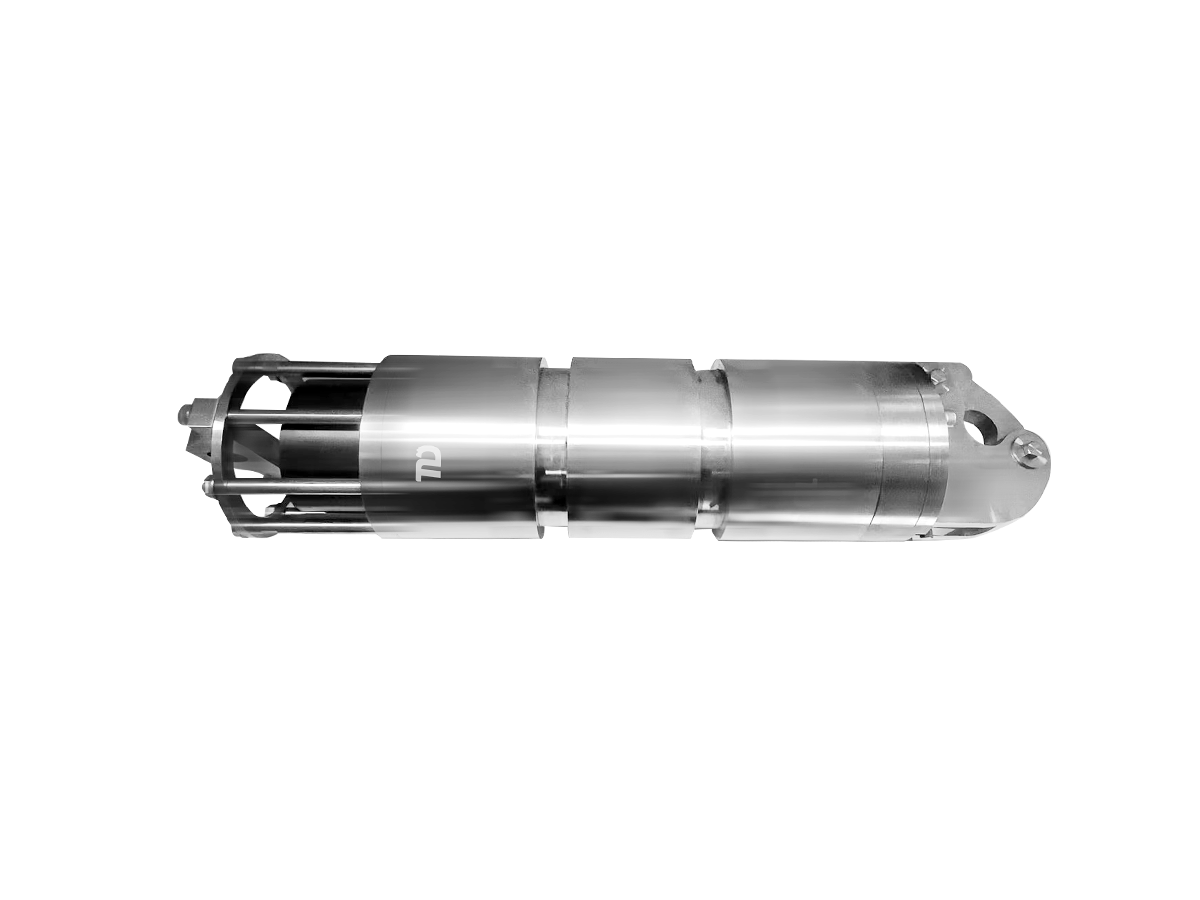
Main application scenarios
The acoustic release device has excellent adaptability to deep-sea environments and uses corrosion-resistant materials to operate stably under complex conditions at all depths of the ocean; Reliable power and load performance, driven by high torque to quickly release the mechanism, capable of carrying equipment weighing hundreds of kilograms to several tons; Support acoustic remote communication, with multiple precise control modes and status feedback functions; Low power design achieves long battery life; With flexible release methods and rich expansion functions, it is widely used in underwater equipment recovery and task triggering in fields such as scientific research, engineering, and fisheries.
Technical specification
Technical Specifications
(1) Size: Φ 130 x 600mm;
(2) Quality: ≤ 26.5kg;
(3) Maximum working water depth: ≥ 1000m;
(4) Rated load: ≥ 2 tons;
(5) Material: 316L stainless steel or titanium alloy;
(6) Frequency range: 7-15kHz;
(7) Maximum communication distance: ≥ 3000 meters;
(8) Working temperature: -20-50C ° C;
(8) Beam opening angle: horizontal omnidirectional;
(9) Emission sound source level: ≥ 195dB;
(10) Battery type: rechargeable lithium battery;
(11) Continuous working hours: 3 months;
(12) Battery life: Three years.
Composition and Overview
The SinoAR-05 release device mainly consists of the following parts:
|
Acoustic release composition structure |
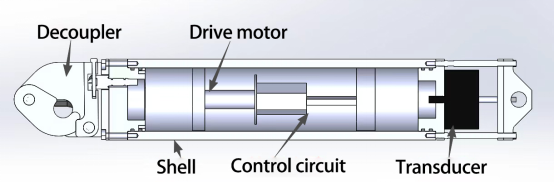
This mechanical acoustic release device is an underwater device triggered by sound signals, used to release loads or recover underwater equipment. The core of the equipment adopts a motor-driven rotary rod mechanism, combined with a balance bar and a locking hook to achieve efficient and reliable release operation. Its main structural components are as follows:
(1) Transducer: receives underwater acoustic commands and converts them into control signals.
(2) Control circuit: Receive signals sent by transducers to execute corresponding instructions.
(3) Drive: Drive the rotary lever to release according to the control signal.
(4) Decoupling: Used to fix the load and decouple after triggering the release signal.
(5) Shell and sealing components: provide water pressure resistance protection and adapt to underwater use environments.
The core execution component adopts a precision mechanical structure design and is directly connected to the motor drive module. After receiving the release command from the control module, it is unlocked by the motor drive mechanism to achieve safe and fast release of the load equipment. It has the characteristics of high unlocking accuracy, fast response speed, and stable locking state.
Core strengths
(1) Dual mode design
Simultaneously supporting remote command release and timed automatic release; while providing operational flexibility, it ensures the safety redundancy of critical equipment and data recovery.
(2) Powerful networking capability
With advanced coding technology, it can support 120 launchers to work together in the same sea area without interfering with each other, achieving large-scale and high-density deployment of observation networks.
(3) High reliability guarantee
Equipped with automatic self check function when powered on, it can quickly diagnose the status of core components, ensuring that the equipment is always in the best working condition before deployment and reducing task risks.
(4) Intelligent state monitoring
Provide distance measurement function, allowing users to remotely monitor the distance between the device and themselves, providing critical data support for task decision-making.
(5) Communication security and reliability
Adopting encrypted instructions and status feedback mechanism to ensure that operation instructions are not mistakenly triggered and the execution results can be confirmed in real time.
(6) Convenient maintenance and high reliability
The built-in rechargeable battery significantly reduces maintenance frequency and sealing risks caused by cabin replacement, and improves the reliability of long-term deployment.
(7) Excellent environmental adaptability
Adopting pressure resistant and corrosion-resistant materials and a wide temperature range design, it can operate stably in extreme environments from shallow waters to full sea depths in global waters.
Software
Mainly used for synchronizing release time and setting release time
|
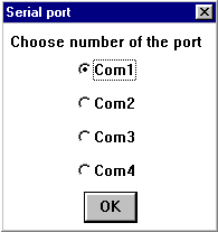
Serial port selection interface |
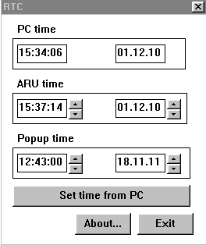
Open the software and click on 'Set time from PC' to synchronize the computer's time with the acoustic release device;
|
Time synchronization interface |
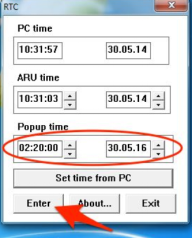
Automatic release time setting: modify the time in ‘Popup time’, and then click the ‘Enter’ button. The modified time is the time when the acoustic release device automatically releases.
|
Automatic release time setting interface |
Power consumption and supply
(1) The working parameters of the SinoAR-05 mechanical marine acoustic release device under different power consumption states using its built-in battery power supply mode are as follows:
Table 6.1 Power consumption status parameters
|
Power consumption status |
Power consumption value |
Instructions |
|
static power consumption |
≤5mA |
The device is in standby mode, only maintaining the basic operation of the acoustic receiver and control module, without performing release or ranging operations. |
|
Distance measurement power consumption |
≤20mA |
The device performs distance measurement function, and the acoustic receiver continuously receives signals and calculates distance. The control module processes distance measurement data in real time. |
|
Release power consumption |
≤50mA |
The device performs active or timed-release actions, the motor drive module starts, and the mechanical release mechanism is driven to unlock. |
|
Sleep mode power consumption |
≤1mA |
The device is in a deep sleep state, retaining only the battery level monitoring function, suitable for scenarios that do not require frequent monitoring during long-term anchoring operations. |
(2) Supply voltage range
The main power supply battery voltage is 16.8V, and the motor power supply battery voltage is adapted according to the motor voltage. The voltage of this motor power supply battery is 37.8V, which is compatible with different specifications of rechargeable lithium battery packs or dry battery packs. The power supply stability is strong, and it can still work normally under voltage fluctuations of ± 10%, ensuring the reliable operation of the equipment in complex power supply environments.
Related products